
In computational image processing, there exist two domains that, at first glance, could hardly be considered academically distinct: Astrophotography, which accumulates weak photons across cosmic distances, and Extreme Macro Photography, which isolates microscopic depth-of-field layers in the millimeter range.
From a mathematical and algorithmic perspective, however, both face exactly the same problem: How does one reconstruct an undistorted, low-noise, and artifact-free overall representation from an incomplete, optically distorted image stack?
While established stacking programs have treated this challenge for decades as a static, purely pixel-based computation, the MoonEngine, in conjunction with the cognitive subsystem L.U.N.A., takes a different approach: We couple deterministic signal processing with adaptive heuristics—while transparently illuminating the real limitations of the optics.
1. The Reality on the Moon: Seeing vs. Image Fusion
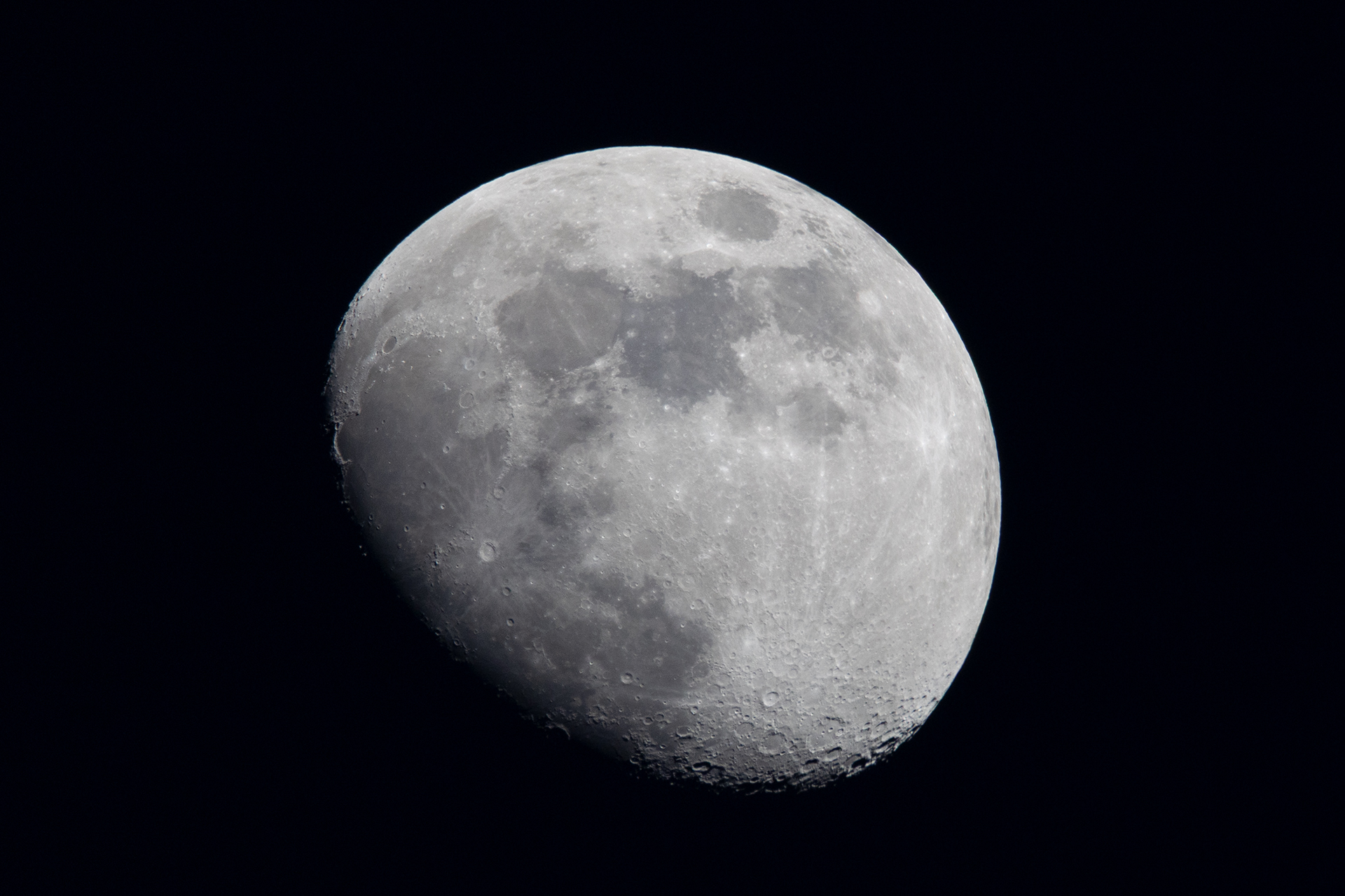
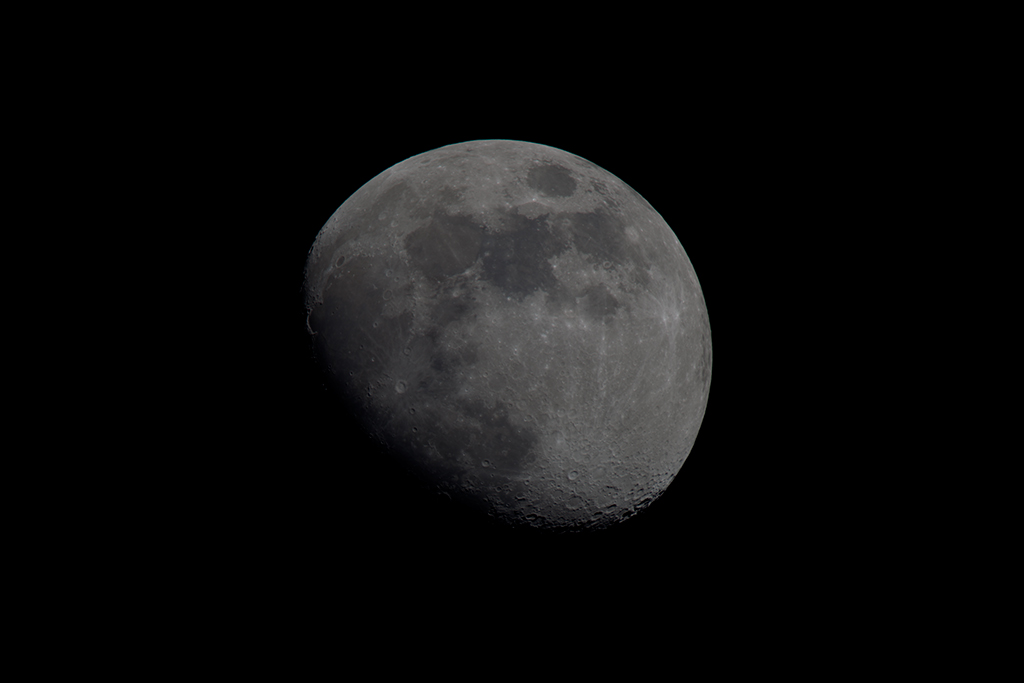
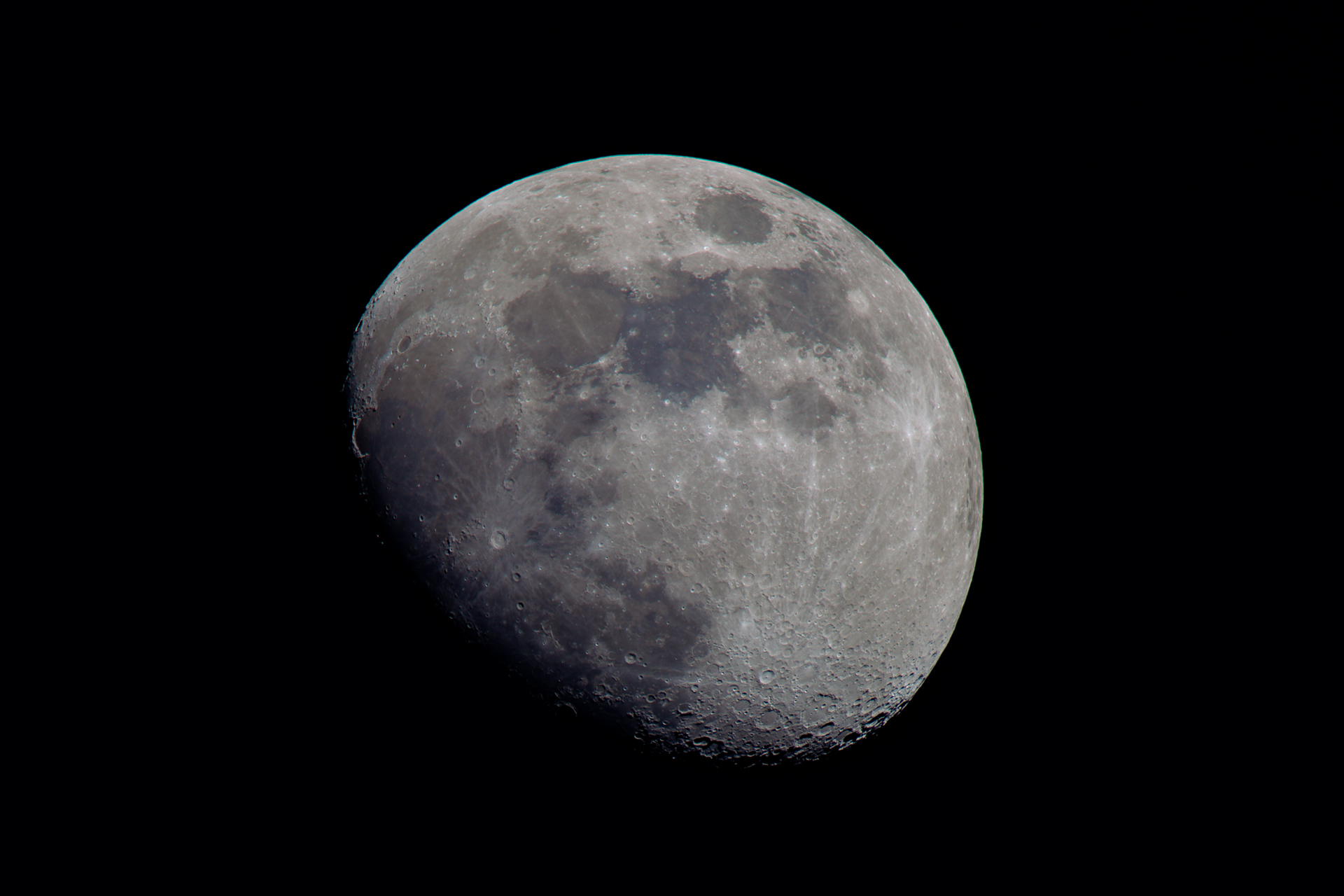
Anyone pointing a high-resolution camera system with extreme focal length (e.g., 800 mm to 1200 mm) at the lunar surface is looking through kilometers of dense, thermally unstable Earth's atmosphere. Convection currents and vertical temperature gradients generate the dreaded seeing: local focusing variations, chromatic dispersion, and wandering wavefronts that deform the image field at tens of Hertz.
Where Classic Tools Fail:
- Static Global Metrics: Software often selects frames based on global RMS contrast. A frame that is sharp in the center but distorted by thermal air currents at the edges is incorrectly evaluated as the optimal reference.
- Memory Collapse: When attempting to load thousands of uncompressed 45-megapixel RAW frames, unbuffered allocations force the operating system to swap—an
Out-of-Memorycrash is inevitable.
The MoonEngine Architecture:
- Multi-Scale Laplace Kernels: Instead of global estimations, our algorithm analyzes edge sharpness across multiple scaling levels (3x3, 5x5, 11x11). This reliably separates sharp crater formations from high-frequency sensor noise.
- Deterministic Chunk Streaming: The
SystemProfileranalyzes the physically available RAM and fragments the computation into deterministic chunks. Even massive sequences run stably with a flat memory curve.
2. Problem Areas in Macro Photography: Focus Breathing, Reflections & Halos
During macro stacking (e.g., on mushrooms, lichens, or crystals), the plane of focus is shifted via fine micrometer steps. This generates typical optical artifacts that often cause standard stackers to fail:
A. Focus Breathing (Dynamic Scale Change)
Every optical lens system minimally changes its effective focal length when the focus is shifted. The subject "breathes": it enlarges or shrinks across the image stack.
* The Error: Rigid addition creates double contours and soft edges.
* Our Solution: The engine_macro fully compensates for scale drifts using an affine SIFT and a modified ECC (Enhanced Correlation Coefficient) registration in the subpixel domain before fusion begins.
B. Specular Highlights & Reflections
Moist mushroom caps, insect exoskeletons, or mineral edges generate specular highlights. These pixels are often fully saturated on the sensor (255 or 65535). * The Error: Conventional stackers incorrectly classify highlights as unstructured blur and replace them with blurred layers. This results in torn, gray patches. * Our Solution: An adaptive saturation mask semantically freezes the highlights and anchors their brightness value stably in the summed image, rather than applying erroneous contrast powers.
C. Hard Edges & Transparent Halos (Occlusion Boundaries)
The most complex problem in focus stacking: when a sharp foreground object (e.g., a mushroom cap) is positioned in front of a distant background.
Problem Zone: Occlusion Boundary
+------------------------+
| Sharp Foreground | ---> Sharp Contour
+------------------------+
| Diffuse Blur Edge | ---> Here the blurred background optically mixes with the sharp foreground edge!
+------------------------+
If the camera captures the sharp background, the foreground becomes extremely blurred and lays down as a diffuse veil over the edge regions. Conventional stackers cannot mathematically separate this veil—resulting in an unnatural, transparent "ghost halo" around the edge.
3. The Mathematical Pipeline: Numerical Stability over Overflow
Many experimental stackers fail due to numerical overflow when attempting to sharply separate edges. If a Laplace weight is simply blindly powered, astronomically high values are generated from 16-bit raw data, leading to NaN (Not a Number) or memory overflows.
The MoonEngine deterministically normalizes the edge matrix using a stepwise fusion equation:
# Excerpt from engines/engine_macro.py:
# Stable weight synthesis without floating-point overflow
norm_weight = np.clip(weight / 255.0, 0.0, 1.0)
weight = np.power(norm_weight, 4.0).astype(np.float32)

better = weight > max_weight_tracker
max_weight_tracker[better] = weight[better]
depth_map[better] = frame_index

final_img += img * weight[..., np.newaxis]
accum_weight += weight
This exponentiation radically dampens soft blur transitions, ensuring that only the steepest edge receives the credit for the final pixel. Concurrently, every pixel decision is logged in a high-resolution depth map (depth_map).
4. The Limits of Pure Physics – and Where L.U.N.A. Takes Over
No Fourier Transform or Laplace filter in the world can conjure image information that was not optically captured:
- Focus Gaps: If the macro stage has moved by 50 µm, but the optical depth of field is only 25 µm, a physical void exists between two image planes. Pure mathematics can only mushily interpolate this region.
- Occluded Edges: When the blur veil completely overexposes fine structures, such as mushroom gills, physics yields zero signal at that point.
Here, classical signal processing reaches its absolute limit. And precisely here begins the raison d'être of L.U.N.A. Prime:
- Autonomous Dataset Guillotine: L.U.N.A. analyzes the variance trend of the entire stack prior to calculation. If the AI detects that edge frames in a focus series do not represent relevant sharpness, it autonomously trims them. This saves computation time and prevents noise from diluting the result.
- Cognitive Caching via
PredictiveCache: Macro slides often drift linearly. L.U.N.A. speculatively predicts the transformation matrices between neighboring frames beforehand. Upon a successful match, the expensive feature calculation is completely bypassed. - Semantic Depth Segmentation: Instead of viewing pixels in isolation, L.U.N.A. recognizes contiguous surface structures. Depth jumps are identified at edges, allowing background blur to be selectively masked and halo fringes to be drastically reduced.
- Dual-Use Bridge to 3D Reconstruction: The same depth matrix that sharpens the image hands off the engine to the
TacticalMapper. The result is not just a 2D photograph, but a true 3D height model of the object.
5. Measured Performance: Autonomous Optimization in Real-World Benchmarks
The theoretical architecture proves its utility only under real data loads. Our internal hardware sensor (SystemProfiler) automatically determines the physical limit of the host system before each run and configures threads and tile sizes without user intervention.
| Mission Sector | Raw Frames | Guillotine Filter (Top 15%) | Selected Elite Frames | CPU Allocation | Tile Dimension | Total Duration |
|---|---|---|---|---|---|---|
Sector Moon00003 |
274 RAWs | Active (Crater Radar) | 41 Frames (38 merged) | 11 Cores | 4096 x 4096 px | 07:05 Min |
Sector Moon00004 |
198 RAWs | Active (Crater Radar) | 29 Frames (29 merged) | 11 Cores | 4096 x 4096 px | 05:10 Min |
Why These Numbers Are Crucial:
- Radical Data Reduction Before I/O Load: The Crater Guillotine filters out 85% of unusable frames (seeing noise) before the computationally intensive 2-stage registration. Instead of processing 274 full images through the affine transformation, only the 41 sharpest layers are calculated.
- Deterministic Tiling: By using fixed tiles of 4096 x 4096 pixels, the 11 parallel CPU threads never encounter memory conflicts.
- No User Trial-and-Error: The user does not need to assign CPU cores or guess tile sizes—the system adapts automatically to the hardware.
Conclusion & Outlook
The interplay between the deterministic computational power of the MoonEngine and the cognitive heuristics of L.U.N.A. proves that modern image processing should not hide behind outdated interfaces and rigid algorithms.
By mathematically modeling optical flaws such as focus breathing, seeing, and edge halos, and securing them with semantic AI decisions, we overcome the stagnation of conventional stacking suites.
In the next white paper article, we will take a detailed look at the Zero-Memory-Leak Architecture and demonstrate how Agent Joan and the PredictiveCache optimize I/O streaming for 10,000 RAW files.